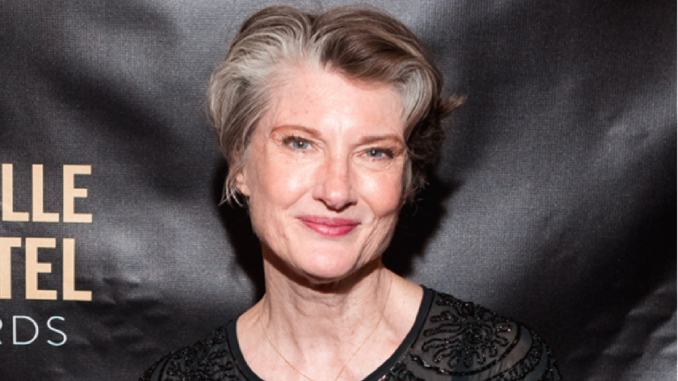
VIRGIN RIVER SEASON 8 HEARTBREAK: Hope McCrea Dies, Leaving Doc and the Entire Town in Unthinkable Grief!
The small mountain town of Virgin River has endured heartbreak, unexpected tragedies, painful secrets, and life-changing decisions, but what if its next great emotional storm were to claim one of its most outspoken and unforgettable residents? Imagine a hypothetical Season 8 storyline in which Hope McCrea suddenly dies, leaving Dr. Vernon “Doc” Mullins facing a future he never imagined and an entire community struggling to understand how life could continue without the woman whose personality has filled so many rooms with energy, laughter, and sometimes wonderfully inconvenient opinions. For years, Hope has been far more than the mayor of Virgin River. She has been a friend, a determined community leader, a fierce defender of the people she loves, and a woman whose complicated relationship with Doc has demonstrated that lasting love requires patience, forgiveness, and the willingness to keep choosing one another even when life becomes difficult. Her hypothetical death would create an emotional earthquake that reaches every corner of the town, transforming familiar streets into reminders of the woman who once seemed impossible to ignore. Although this dramatic scenario is not a confirmed Season 8 plot development, the possibility offers a compelling way to explore the strength of Doc and Hope’s marriage, the resilience of their friends, and the devastating question of how people learn to live when someone essential to their world is suddenly gone.
Hope McCrea has never been the kind of person who disappears quietly into the background. Her personality is bold, expressive, and unmistakable, and she has spent much of her life making sure that the people around her know exactly what she thinks. Sometimes her determination creates tension, particularly when she becomes convinced that she understands what is best for everyone else. Yet beneath her stubbornness lies a generous heart and a genuine commitment to the community she calls home. Hope is often the person who notices when something is wrong, the one who asks difficult questions, and the friend who refuses to abandon someone simply because the situation has become complicated. She may not always approach problems delicately, but her intentions frequently come from a sincere desire to protect the people she loves. This combination of strength and vulnerability has helped make her such a memorable presence in Virgin River. If a hypothetical Season 8 tragedy were to remove Hope from the town, the silence she left behind would feel especially painful because so much of her character has been defined by her determination to make herself heard.
For Doc Mullins, the loss would be almost impossible to comprehend. Their marriage has never been a simple fairy tale in which two people always agree, understand each other perfectly, or express affection in the same way. Doc is practical, reserved, and often more comfortable demonstrating love through actions than explaining his emotions. Hope, on the other hand, is expressive and outspoken, rarely content to leave an important conversation unfinished. Their differences have sometimes caused arguments, misunderstandings, and moments when each has struggled to appreciate the other’s perspective. Nevertheless, those differences have also helped define the relationship that has endured through years of shared experiences. They have learned to navigate conflict, rediscover affection, and recognize that a lasting marriage is not measured by the absence of disagreements but by the willingness to repair the damage when disagreements occur. A storyline involving Hope’s possible death would make those ordinary moments of reconciliation feel painfully precious. Every argument Doc once expected to resolve tomorrow could become a memory he would give anything to revisit, while every familiar gesture of affection could remind him of how much of his daily life had been built around her presence.
The tragedy could begin with a seemingly ordinary day, making the eventual shock even more devastating. Hope might be preparing for a community meeting, discussing local concerns with familiar enthusiasm, or reminding Doc that he has been spending too many hours at the clinic. He could respond with one of his characteristic remarks, prompting Hope to roll her eyes before returning to whatever task she has decided must be completed immediately. Their exchange would appear completely routine, the kind of familiar disagreement that couples experience without giving it much thought. Perhaps Hope would tell Doc that they need to make time for themselves, while he would promise that they could discuss their plans later. She might accept his answer with a playful warning that she intends to hold him to it. Nothing about the moment would suggest that their shared routine could soon be shattered. In a carefully constructed trailer concept, however, these ordinary details could become the emotional foundation of a much darker story, reminding viewers that the moments people take for granted often become the memories they treasure most after a devastating loss.
The first signs of danger might arrive through an unexpected phone call or a sudden emergency that leaves the residents of Virgin River struggling to understand what has happened. Doc could initially assume that Hope is delayed by another community responsibility, perhaps attending a meeting or helping someone who has encountered a problem. When she fails to respond to his calls, irritation might gradually give way to concern. He knows Hope well enough to recognize that she is rarely unreachable without a reason, particularly when she has promised to return at a certain time. As the minutes pass, he might begin contacting friends, asking whether anyone has seen her. The answers could be incomplete, uncertain, or frighteningly contradictory. The emotional tension would build not through dramatic declarations but through Doc’s growing realization that something is seriously wrong. A man who has spent years helping patients navigate emergencies would suddenly find himself waiting for information about the person whose well-being matters most to him.
If the hypothetical storyline ultimately revealed that Hope had suffered a fatal medical emergency, the emotional impact would be profound. Doc might receive the news in a hospital corridor, a quiet room, or another familiar location that suddenly becomes inseparable from the worst moment of his life. The initial reaction could be disbelief rather than immediate tears. He might ask the same question repeatedly, searching for an explanation that makes the information easier to accept. Perhaps he would insist that there must be a mistake, that someone has misunderstood the situation, or that another medical intervention might still be possible. His professional knowledge would not protect him from the instinctive refusal to believe that the person he loves is gone. In fact, understanding the realities of medicine could make the moment more painful, because he would recognize the implications of the information while desperately wishing it were not true. The scene could become one of the most emotionally devastating moments imaginable for the character, revealing how helpless even an experienced physician can feel when confronted with a loss that cannot be reversed.
Doc’s grief would be especially complicated because his identity has been shaped by his work as a doctor and his role as a dependable member of the community. He is accustomed to being the person who remains calm when others are frightened, the professional who explains difficult situations, and the friend who offers practical advice when someone does not know what to do. His instinct would probably be to focus on the immediate responsibilities surrounding Hope’s death. He might answer questions, contact people who need to be informed, and ensure that practical arrangements are handled properly. These actions could give him a temporary sense of purpose, allowing him to concentrate on tasks that have clear beginnings and endings. Yet once those responsibilities were completed, he would have to confront the emptiness waiting for him at home. The house would contain countless reminders of Hope: the things she left on a table, the chair where she often sat, the familiar sound of her voice he could almost imagine hearing from another room. The absence would become most painful when he instinctively expected her to appear and then remembered that she never would.
One of the most powerful aspects of such a storyline would be the possibility that Doc had not fully appreciated how deeply Hope’s presence shaped his everyday life. He might initially focus on their disagreements, remembering moments when he had been impatient or failed to explain why something mattered to him. He could replay conversations in his mind, wondering whether he should have listened more carefully or expressed his affection more openly. Perhaps he would discover an unfinished note or encounter an ordinary object that reminded him of a promise they had made together. These small discoveries could bring back memories of the early days of their relationship, the challenges they overcame, and the quiet ways they demonstrated their commitment to one another. Doc might begin to recognize that the marriage he sometimes described through its difficulties had also given him years of companionship, humor, stability, and love. His regret would not necessarily mean that he had failed Hope. Instead, it would reveal the painful human tendency to reconsider ordinary moments after realizing that no new ones can be created with the person who has died.
Mel Monroe could become an important source of support for Doc during this difficult period. As a healthcare professional, Mel understands the seriousness of medical emergencies, but her own history of personal loss has also taught her that professional knowledge cannot eliminate emotional pain. She has experienced the challenge of continuing to live after losing people she loves, and she knows that grief can make even familiar surroundings feel strange. Her relationship with Doc has included professional cooperation, mutual respect, and the occasional challenge of navigating their different approaches to difficult situations. If Hope were gone, Mel might feel compelled to help Doc in every possible way, from checking whether he has eaten to ensuring that he does not isolate himself completely. Yet she would also recognize that she cannot solve his grief through practical advice. She might sit with him in silence, listen as he recounts memories of Hope, or allow him to express emotions he would normally keep private. Her greatest contribution could be the understanding that grief does not require immediate solutions and that sometimes the most meaningful support comes from remaining present when there is nothing useful to say.
Jack Sheridan would likely be deeply affected as well. Hope has been an important part of the community that Jack considers family, and her absence would leave an unmistakable gap in the network of relationships that makes Virgin River feel like home. Jack understands the demands of responsibility and the emotional burden of trying to protect the people around him. He might therefore recognize that Doc is at risk of retreating into work, using the clinic as a distraction from the pain he cannot yet face. Jack could encourage him to take time away, accompany him on a walk, or simply stop by to make sure he is not spending every evening alone. However, he would need to balance his desire to help with respect for Doc’s independence. Doc might reject assistance, insisting that he has responsibilities to fulfill or that he does not want to burden anyone else with his problems. Jack’s challenge would be to demonstrate that accepting support is not a sign of weakness. In a community that has repeatedly depended on Doc, it would be especially important for its residents to show that they are willing to care for him when he can no longer maintain his familiar role as the person who helps everyone else.
The loss would also transform the atmosphere of Virgin River itself. Hope’s involvement in community affairs has often brought residents together, whether they agree with her methods or not. Her determination to organize events, address local concerns, and protect the town’s interests has made her an influential presence in everyday life. Without her, meetings might feel strangely subdued, familiar arguments might no longer occur, and residents could find themselves missing even the habits that once irritated them. Someone might begin to offer an opinion during a community gathering and instinctively look toward the place where Hope would normally be sitting. Another resident might encounter a problem and wonder what Hope would have done to address it. These moments would reveal that her influence extended far beyond the official responsibilities associated with her position. She had helped shape the personality of the town through her relationships, her convictions, and her willingness to become involved when other people hesitated.
The community could respond to the tragedy by organizing a memorial that reflects the many different sides of Hope’s life. Rather than presenting her only as a public figure or a wife, the gathering could bring together people whose experiences with her were entirely different. Some might remember her determination to protect the town, while others could share stories about the times she offered unexpected kindness or stood beside them during personal difficulties. There could be humorous memories as well, recalling her outspoken opinions, her impatience with unnecessary delays, or her ability to turn a simple discussion into an energetic debate. These stories would help Doc see that Hope’s influence had reached further than he might have realized. He would not be the only person mourning her, but he would be the person who knew the private details of their marriage, the moments when she was vulnerable, and the small gestures through which she expressed affection. The memorial could offer him comfort while also reminding him that no community celebration could replace the person he had lost.
Yet grief rarely follows the orderly pattern people might expect from a memorial or farewell. Doc could find himself feeling relatively calm during a gathering and then becoming overwhelmed by sadness while performing an ordinary task days later. He might hear someone use a phrase that Hope frequently repeated, see a familiar place they once visited together, or encounter an old photograph when he was not prepared for the memories it would bring. Such moments could leave him feeling as though he has made no progress at all. The storyline would be more convincing if it allowed him to experience these emotional fluctuations without suggesting that each difficult day represents a failure to heal. Some mornings he might be able to work, speak with friends, and remember Hope with a smile. On others, the thought of entering their home could feel unbearable. His recovery would not be measured by how quickly he stopped crying or how soon he returned to his previous routine. It would be measured by his gradual ability to acknowledge the loss while allowing himself to remain connected to the world around him.
The clinic could become another important symbol of Doc’s struggle. For years, it has represented his commitment to the town and his determination to provide care even when circumstances are difficult. Returning to work might initially offer a welcome distraction, giving him familiar responsibilities and opportunities to help people who need him. Yet the clinic could also remind him of conversations he once shared with Hope about his workload, his health, and the need to make time for their marriage. Perhaps she had often encouraged him to slow down, warning him that he could not spend every waking hour attending to other people’s problems. After her death, those familiar reminders might take on a new meaning. Doc could begin to question whether he had allowed his professional responsibilities to occupy too much of his life, even though he had always believed that serving the community was one of the most important things he could do. The challenge would be to recognize that honoring Hope’s memory does not require abandoning his work. Instead, he might need to rediscover a healthier balance between caring for others and allowing himself to be cared for.
Mel and the other medical staff could also face the practical challenge of keeping the clinic running while supporting a grieving colleague. Their response would demonstrate the importance of shared responsibility in a community where individual relationships often overlap with professional obligations. Someone might take over additional appointments, another person might help with administrative work, and others could encourage Doc to take time away when he needs it. These arrangements would not remove the emotional burden of losing Hope, but they would show that the town has learned something from years of relying on Doc. The people he has helped would now have an opportunity to return that care. A clinic that once represented his individual dedication could become a symbol of collective compassion, demonstrating that a community remains strong when its members recognize one another’s needs.
For Doc, one of the most difficult challenges might be learning how to remember Hope without allowing every memory to become a source of pain. In the early stages of grief, he might avoid photographs or familiar places because they remind him of what he can no longer recover. Over time, however, he could begin to recognize that the memories themselves are not the enemy. A photograph might remind him of an argument that ended in laughter, a celebration they enjoyed together, or a quiet afternoon when neither needed to say much. He might begin sharing these memories with Mel and Jack, gradually allowing other people to see the private tenderness that existed beneath his sometimes gruff exterior. Perhaps he would finally tell a story about Hope that he had never considered important enough to share before. In doing so, he could preserve the complexity of their relationship, acknowledging not only the pain of losing her but also the extraordinary value of the years they spent together.
The hypothetical storyline could also explore how Hope’s death affects the people who depended on her guidance. Some residents might feel uncertain about the future of the town’s leadership, while others could question whether they had appreciated her work enough. Someone who frequently disagreed with her might discover that even their arguments had become part of a familiar routine they now miss. A younger resident could remember the encouragement Hope offered at a difficult moment and decide to become more involved in community affairs. These developments would prevent the story from reducing Hope to a tragedy that exists only to affect Doc. Her life would continue to influence the town through the people she helped, the values she defended, and the example she set. Her legacy would not be defined solely by the moment of her death but by the many years in which she made a difference to the people around her.
Perhaps the most emotional turning point would arrive when Doc finally acknowledges that he cannot continue living as though grief is a problem he must solve privately. He might initially insist that he is fine, dismissing his friends’ concerns and returning to work before he is ready. A conversation with Mel could gradually help him understand that he does not need to conceal his pain to protect other people. He could admit that the house feels empty, that he misses Hope’s voice, and that he does not know what to do with the future they had planned together. Such an admission would be difficult for a man accustomed to maintaining control, but it could also represent an important step toward healing. He would not suddenly feel better, and the conversation would not provide a simple resolution. Instead, it would allow him to recognize that the people around him are willing to share the burden, even if they cannot make it disappear.
Virgin River’s natural beauty could reinforce the emotional contrast at the center of Doc’s journey. The mountains would continue to rise above the town, the river would continue flowing, and residents would continue going about their daily lives. At first, this continuity might seem almost cruel. Doc could wonder how the world can remain so ordinary when his own life has changed beyond recognition. Yet the passage of time could eventually become a source of reassurance. The familiar landscape would remind him that life continues to offer opportunities for connection, even after profound loss. A walk through the town might initially trigger memories of Hope, but it could later become an opportunity to remember her with gratitude rather than only sorrow. The scenery would not heal him, and the passage of time would not erase his grief. Instead, these familiar surroundings could provide a steady backdrop as he gradually discovers that he can continue living without abandoning the love that shaped his life.
The most important message of this imagined Season 8 tragedy would be that healing does not mean forgetting. Doc would never need to stop loving Hope in order to find a new sense of purpose. Their marriage would remain part of his identity, influencing the way he approaches friendships, professional responsibilities, and the people who come to him for help. He might become more willing to express affection openly, recognizing how much ordinary words and gestures can mean. He could begin taking the breaks Hope once encouraged him to take, not because he has forgotten her advice but because he finally understands its importance. He might also become more patient with people who struggle to communicate their feelings, remembering that even those who seem strong can carry pain they do not know how to express. These changes would not make the tragedy worthwhile or suggest that Hope needed to die for Doc to grow. Rather, they would show how people sometimes carry the lessons of a loved one into the future, allowing that person’s influence to remain present in everyday decisions.
Ultimately, a hypothetical Season 8 storyline in which Hope McCrea dies would challenge the heart of Virgin River by forcing Doc and the entire town to confront a loss that cannot be repaired through determination, professional skill, or community organizing. Doc would have to learn how to live with the absence of his wife, while Mel, Jack, and their friends would discover how to support someone whose grief cannot be solved. The town would have to find ways to preserve Hope’s legacy without pretending that another person could simply take her place. The emotional power of the story would come from the recognition that the people who shape our lives are often remembered through the smallest details: a familiar voice, an old disagreement, a shared joke, or a promise that once seemed ordinary. Although this imagined tragedy is not confirmed as a Virgin River Season 8 plot, it raises a deeply moving question about love and loss. Could Doc ever learn to face another morning without Hope beside him? Perhaps he would never stop wishing she were there. But with the support of the community she loved, he could eventually discover that remembering her and continuing to live are not opposing choices. Her absence would change Virgin River forever, yet the compassion, determination, and love she brought into the town could continue shaping the lives of everyone she left behind.