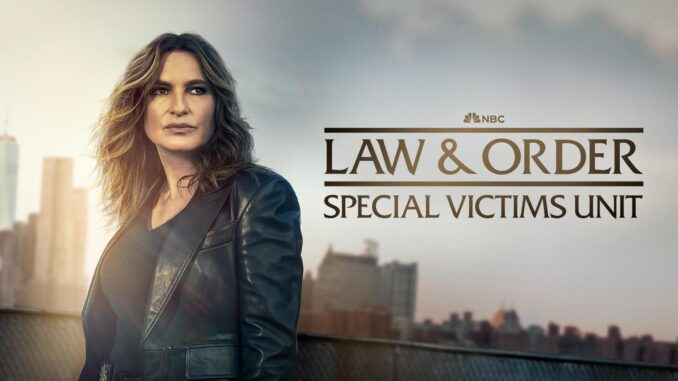
For more than three decades, Law & Order has been one of the most recognizable names in television history. The iconic “dun-dun” sound, gripping courtroom battles, and stories inspired by real-life headlines have made the franchise a permanent fixture for generations of viewers. Yet despite its legendary status, even television giants aren’t immune to uncertainty.
Over the past year, rumors surrounding the future of Law & Order reached a fever pitch. Industry insiders questioned whether NBC would continue investing in another season as production costs climbed, competition from streaming platforms intensified, and the television landscape became more crowded than ever. With several network dramas facing cancellations, many longtime fans feared the unthinkable—that Law & Order could once again disappear from primetime.

Those fears weren’t entirely unfounded.
The franchise has already experienced one dramatic cancellation in its history. After its original run ended in 2010, few believed the series would ever return. When NBC revived Law & Order in 2022, it was viewed as an ambitious gamble. While loyal fans celebrated the comeback, the challenge of rebuilding a decades-old franchise in an era dominated by streaming was enormous.
Every season since the revival has carried enormous expectations.
Strong ratings alone are no longer enough to guarantee survival. Modern network television must balance live audiences, delayed viewing, streaming performance, production budgets, advertising revenue, and long-term franchise value. Even successful series have found themselves unexpectedly canceled as networks continue reshaping their programming strategies.
That reality placed Law & Order under an intense spotlight throughout the renewal season.
As NBC announced decisions for other scripted dramas, the silence surrounding Law & Order became increasingly noticeable. Fans watched renewal announcements arrive for other shows while their favorite courtroom drama remained in limbo. Social media quickly filled with speculation that the network might finally be preparing to close the book on one of television’s most historic franchises.
Every passing week seemed to strengthen that belief.
Then, almost without warning, NBC finally made its decision.
The network officially renewed Law & Order for Season 26, ending months of uncertainty and immediately reassuring millions of viewers that the franchise would continue. The announcement arrived just before NBC finalized its new television schedule, making the timing feel especially dramatic after weeks of speculation.
For many fans, the renewal felt less like routine business and more like a last-minute rescue.
While NBC has never suggested the series was moments away from cancellation, the unusually long wait for an official announcement created an atmosphere of uncertainty unlike previous seasons. In today’s television industry, delays often fuel rumors, and Law & Order became one of the biggest subjects of speculation among network drama fans.
Yet surviving another renewal cycle is only part of the story.
Season 26 represents something much larger.
NBC isn’t simply extending the life of an aging procedural—it continues to invest in one of its most valuable television brands. Together with Law & Order: Special Victims Unit, the original series remains a cornerstone of the network’s primetime lineup. Few franchises have demonstrated the same ability to evolve while maintaining the storytelling style that made them famous.
That balance has become one of Law & Order‘s greatest strengths.
The series continues adapting to changing headlines, modern criminal investigations, evolving legal debates, and contemporary social issues while preserving the straightforward storytelling formula audiences have trusted for decades. Rather than reinventing itself completely, the franchise has succeeded by evolving carefully without abandoning its identity.
Season 26 appears ready to continue that philosophy.
Viewers can expect fresh cases inspired by current events, more complex legal dilemmas, and new challenges for the detectives and prosecutors who now carry the legacy established by generations of characters before them. Every new episode has the difficult task of honoring the franchise’s history while proving that Law & Order still has important stories left to tell.
That responsibility has never been greater.

Network television is changing faster than ever before. Streaming services dominate conversations, audience habits continue shifting, and scripted dramas face pressure from every direction. Shows that once seemed untouchable now disappear with surprising speed, regardless of critical acclaim or loyal fan bases.
Against that backdrop, Law & Order‘s survival becomes even more remarkable.
The franchise has endured changing television eras, multiple cast transitions, industry-wide disruption, and fierce competition without losing the qualities that made it an institution. Very few dramas can claim that kind of resilience.
Perhaps that’s why the latest renewal feels different.
It isn’t simply another season.
It’s another reminder that some television franchises become larger than the trends surrounding them.
For more than thirty years, Law & Order has adapted, survived, and continued telling stories that reflect the world outside the courtroom. Every renewal reinforces the idea that audiences still value intelligent procedural dramas grounded in justice, investigation, and moral complexity.
The television landscape may continue to change.
New competitors will emerge.
Viewing habits will evolve.
But if Season 26 proves anything, it’s that Law & Order remains one of the rare franchises capable of surviving challenges that have ended countless others.
After everything the series has overcome, one truth feels clearer than ever:
The franchise that helped define modern crime television isn’t ready to leave the courtroom just yet.