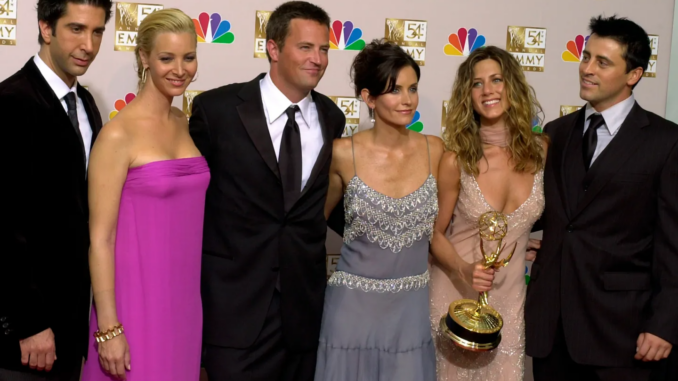
When Friends aired its final episode in 2004, many viewers assumed the future would look similar for all six of its stars. After all, Jennifer Aniston, Courteney Cox, Lisa Kudrow, David Schwimmer, Matt LeBlanc, and Matthew Perry had spent a decade becoming one of the most successful ensembles in television history. They shared unprecedented fame, negotiated contracts together, and became global celebrities almost simultaneously.
From the outside, it seemed logical that their post-Friends careers would follow similar paths. They were equally recognizable, equally beloved by audiences, and equally associated with one of television’s biggest cultural phenomena. Yet what happened after the show ended tells a very different story.
More than twenty years later, the six cast members are remembered not only for the characters they played but also for the remarkably different directions their lives and careers took after leaving Central Perk behind. Some became major Hollywood stars. Others focused on smaller creative projects. Some stepped away from the spotlight entirely, while others reinvented themselves in unexpected ways.
Looking back from 2026, perhaps the most fascinating part of the Friends legacy isn’t what happened during the show’s ten seasons—it’s how differently each star chose to navigate life after fame.
Jennifer Aniston Became Hollywood’s Biggest Success Story

If one cast member emerged as the clear post-Friends superstar, it was Jennifer Aniston. Even before the sitcom concluded, Aniston had begun building a successful film career, but few could have predicted just how dominant she would become in the years that followed.
While many television actors struggle to escape the shadow of an iconic role, Aniston successfully transitioned into one of Hollywood’s most recognizable leading ladies. Romantic comedies, dramas, streaming projects, and major studio productions helped establish her as a star whose appeal extended far beyond Rachel Green. Over time, she became one of the entertainment industry’s most influential figures, balancing commercial success with critical recognition.
Courteney Cox followed a different route. Instead of chasing the same type of movie stardom, she found success through television and production work. Her role in Cougar Town introduced her to a new generation of viewers, while her work behind the scenes demonstrated ambitions that extended beyond acting. Cox steadily built a career focused on longevity and creative control rather than simply remaining in front of the camera.
Lisa Kudrow’s journey proved equally unique. Rather than pursuing blockbuster fame, she often gravitated toward selective projects that showcased her versatility as both an actress and writer. Kudrow earned praise for choosing roles that challenged audience expectations, proving she was capable of much more than the quirky charm that made Phoebe Buffay famous. Her career became defined less by visibility and more by artistic credibility.
Together, these three actresses demonstrated that there is no single formula for success after a hit television show. While they started from the same place, each ultimately pursued a career that reflected her own priorities, interests, and creative ambitions.
Some Chased New Opportunities While Others Stepped Back
For the male cast members, the years after Friends revealed an equally interesting contrast.
David Schwimmer surprised many fans by avoiding the traditional Hollywood path. Given his popularity as Ross Geller, audiences expected him to remain a constant presence in major television and film projects. Instead, Schwimmer often focused on directing, theater work, and carefully selected acting roles. He seemed less interested in maintaining celebrity status and more interested in pursuing projects that appealed to him creatively.

This decision allowed him to build a respected career away from the intense spotlight that followed Friends. While he continued appearing in notable productions, he rarely seemed concerned with becoming a permanent fixture of entertainment headlines. For many fans, that choice highlighted a side of Schwimmer that differed significantly from the neurotic, attention-seeking tendencies of Ross.
Matt LeBlanc’s path was perhaps even more surprising. During Friends, Joey Tribbiani became one of television’s most beloved characters, leading many viewers to assume LeBlanc would remain at the center of Hollywood for decades. Instead, after a period of continued acting, he gradually embraced a much quieter lifestyle.

Although his performance in Episodes earned significant praise and introduced him to a new audience, LeBlanc increasingly appeared comfortable stepping away from constant public attention. Rather than chasing every opportunity available, he prioritized personal fulfillment and balance. His relatively low-profile lifestyle became one of the most unexpected stories to emerge from the Friends cast.
Matthew Perry’s journey was perhaps the most complex. While audiences continued to adore Chandler Bing, Perry faced personal challenges that became well known over the years. Despite those struggles, he remained admired for his honesty, resilience, and willingness to help others facing similar difficulties. His later years added an emotional dimension to the Friends legacy that continues to resonate deeply with fans today.
Together, the experiences of Schwimmer, LeBlanc, and Perry demonstrated that fame affects people differently. While some embrace the spotlight indefinitely, others discover fulfillment in quieter pursuits or more personal forms of success.
The Friends Legacy Is Bigger Than Individual Careers

What makes the Friends cast particularly fascinating is that their careers collectively challenge many assumptions about fame. Conventional wisdom suggests that actors emerging from one of television’s biggest hits would pursue similar opportunities. Yet the six stars repeatedly proved otherwise.
Some sought broader recognition. Others pursued creative freedom. Some embraced visibility, while others actively distanced themselves from it. Each path reflected individual values rather than public expectations.
This diversity of outcomes has become one of the most interesting aspects of the show’s legacy. Instead of being remembered solely as a group, the cast members gradually established distinct identities beyond Friends. Their choices demonstrated that success can take many forms, even among people who began from nearly identical circumstances.
For younger actors, their experiences offer valuable lessons about life after a career-defining role. There is no universal blueprint for navigating fame. Some people thrive by expanding their visibility, while others find happiness through selective work, personal projects, or lives outside the spotlight.
Fans have also come to appreciate these differences over time. In the years immediately following Friends, audiences often compared the cast members and measured their achievements against one another. Today, many viewers see things differently. Rather than asking who had the “best” career, they recognize that each actor built a life that reflected unique goals and priorities.
That perspective makes the Friends story even more compelling. The show created six stars, but it did not create six identical futures.
More than two decades after the final episode aired, Friends remains one of the most beloved television series ever produced. Its influence continues spanning generations, introducing new audiences to characters who first appeared on screen in the 1990s. Yet the show’s lasting appeal extends beyond nostalgia.
Part of what keeps fans fascinated is seeing how differently the cast members navigated life after extraordinary fame. Jennifer Aniston became a global entertainment powerhouse. Courteney Cox balanced acting with production. Lisa Kudrow pursued creative and critically respected work. David Schwimmer focused on artistic freedom. Matt LeBlanc embraced a quieter lifestyle. Matthew Perry left behind a legacy defined by both humor and resilience.
Their stories remind us that success is never one-size-fits-all. Even people who share the same starting point can arrive at vastly different destinations. That reality makes the Friends cast unique not only as performers but also as individuals who each responded differently to one of the most extraordinary opportunities television has ever provided.
In the end, Friends created six stars. What happened afterward proved that the most interesting chapters were still waiting to be written.