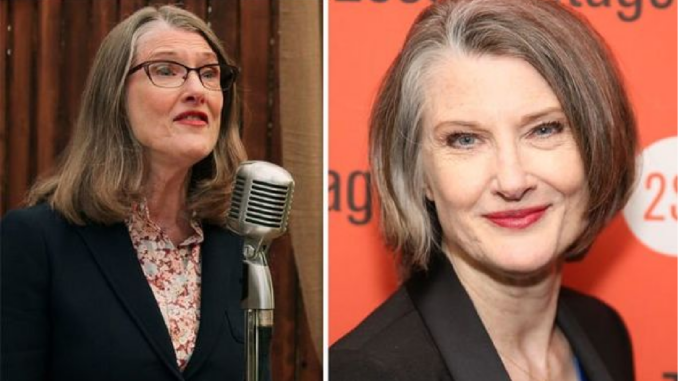
VIRGIN RIVER SHOCKER: Doc Mullins Dies in a Heartbreaking Season 8 Twist — Can Hope Survive This Devastating Loss?
The quiet mountain town of Virgin River has always been a place where broken hearts find the courage to heal, old wounds slowly begin to close, and ordinary people discover that even the darkest chapters of their lives can lead to unexpected happiness. Yet beneath the peaceful scenery, the warm community gatherings, and the comforting rhythm of small-town life, tragedy has always waited around the corner. In a shocking hypothetical Season 8 storyline, the death of Dr. Vernon “Doc” Mullins could become one of the most devastating moments the series has ever imagined, leaving Hope McCrea struggling to face a future she never expected to confront alone. For years, Doc has been more than the town physician. He has been a trusted friend, a source of stability, a stubborn but compassionate mentor, and a man whose dedication to the people of Virgin River has shaped countless lives. His possible loss would not simply mark the end of one character’s journey. It would challenge the emotional foundation of an entire community and force everyone, especially Hope, to reconsider what it means to keep living when the person who has stood beside you through every storm is suddenly gone. Although no fictional twist should be mistaken for a confirmed Season 8 plot, the possibility of such a heartbreaking development offers a powerful way to explore the relationships, sacrifices, and unresolved emotions that make Virgin River so compelling.
From the beginning, Doc Mullins has represented the complicated beauty of a life devoted to others. As a physician in a small and sometimes isolated town, he has spent years caring for people whose problems extend far beyond physical illness. He has delivered difficult news, treated emergencies, offered practical advice, and remained present when patients needed someone willing to listen. Doc is not a perfect man, and that imperfection is part of what makes him believable. His pride can make him difficult to approach, his stubbornness sometimes creates unnecessary tension, and his tendency to conceal his own vulnerabilities can prevent the people closest to him from understanding what he is truly feeling. Nevertheless, beneath his gruff exterior lies a deeply compassionate individual who has repeatedly demonstrated that caring for others means showing up even when circumstances become uncomfortable. His relationship with the people of Virgin River has never depended entirely on his medical expertise. It has been built through years of shared experiences, difficult conversations, and countless moments when he chose responsibility over personal convenience. If a Season 8 storyline were to take Doc away from the town he has served for so long, viewers would have to confront an especially painful question: what happens to a community when the person everyone turns to is no longer there to offer help?
For Hope McCrea, the consequences would be far more personal. Her relationship with Doc has never been a simple romance between two people who happen to live in the same town. Their marriage has been shaped by years of affection, disagreements, pride, reconciliation, and the difficult work of learning how to love someone whose personality is often very different from their own. Hope is outspoken, energetic, and fiercely independent. She has strong opinions and rarely hesitates to express them, particularly when she believes that someone she loves is making the wrong decision. Doc, meanwhile, is practical, reserved, and sometimes reluctant to explain his emotions. These differences have created tension throughout their relationship, but they have also made their bond feel authentic. They have had to learn that love is not always expressed through grand declarations or perfect understanding. Sometimes it is demonstrated through patience, a familiar argument that ends in forgiveness, a quiet gesture of concern, or the simple reassurance that someone will still be there tomorrow. A hypothetical storyline in which Doc dies would strip Hope of that everyday certainty and force her to face the devastating reality that even a relationship built over decades cannot protect anyone from loss.
The most heartbreaking element of such a storyline might be the ordinary moments that come before the tragedy. Imagine Hope and Doc sharing breakfast, discussing the latest problems in town, or disagreeing about a decision that seems insignificant at the time. Hope might complain that Doc is spending too many hours at the clinic, while he might insist that a patient needs his attention. Their exchange could end with a familiar expression of frustration, followed by a brief smile that communicates everything neither person feels the need to say aloud. Nothing about the moment would suggest that their familiar routine could soon disappear. That is precisely what makes the prospect so painful. Real grief often begins with the realization that the moments people once took for granted have become memories. If Virgin River explored this possibility, the emotional impact would come not only from Doc’s death itself but also from Hope remembering the small details of their shared life: his voice in another room, the sound of his footsteps, the way he occupied his favorite chair, and the reassuring knowledge that she could always find him at the clinic. Those details could turn an otherwise quiet scene into one of the most emotionally powerful moments in the series.
Hope’s reaction would also present a difficult challenge for a character who has spent much of her life maintaining control over her surroundings. She is accustomed to organizing community activities, expressing her opinions, and involving herself in other people’s problems. These habits have sometimes made her appear controlling, but they also reveal how deeply she cares about the people around her. When someone is hurting, Hope wants to do something. She wants to make a phone call, organize a fundraiser, offer advice, or find a practical solution. Grief, however, is different from the problems she usually confronts. There is no meeting she can arrange to reverse a death, no argument that can restore the future she imagined, and no amount of determination that can make her stop missing the person she loves. At first, she might attempt to continue her usual responsibilities, convincing herself that remaining busy will prevent the pain from overwhelming her. She could attend town meetings, check on friends, and insist that everyone else needs her to remain strong. Yet once the distractions disappear, the silence at home might become impossible to ignore. The woman who has always been willing to speak her mind could find herself unable to describe the emptiness she feels.
This emotional struggle would become even more complicated if Hope felt that she had left something unsaid. Relationships rarely provide perfect opportunities for final conversations, and people often postpone difficult discussions because they believe there will always be another day. Perhaps Hope would remember an argument she had dismissed as unimportant, a promise she had intended to fulfill, or a moment when she had been too distracted to recognize how much Doc needed her support. Such memories could lead her to question whether she had appreciated their time together enough. Although these feelings would be understandable, they would not mean that Hope had failed her husband. Grief frequently encourages people to revisit the past, searching for explanations or imagining how events might have unfolded differently. A sensitive portrayal would allow Hope to experience these painful thoughts without reducing her relationship with Doc to regret. Their marriage would remain a story of shared commitment, imperfect communication, and enduring love. The tragedy would lie in the fact that even a meaningful life together cannot eliminate the sorrow of losing someone who has become part of one’s identity.
The impact on the wider Virgin River community could be equally profound. Doc’s clinic has long served as one of the town’s essential gathering places, bringing together people whose lives might otherwise follow separate paths. Patients arrive with physical injuries, emotional burdens, family problems, and fears they struggle to express elsewhere. Doc’s presence offers continuity in a world where circumstances are constantly changing. If he were suddenly gone, the clinic would become a place filled with memories as well as unanswered questions. Residents might arrive expecting to hear his familiar voice before remembering that he would never again greet them from behind his desk. Others might recall the times he treated them when they had no money, offered guidance when they felt lost, or remained calm during an emergency. Even people who had disagreed with him could find themselves mourning the absence of his familiar stubbornness. The loss would reveal how deeply one person’s quiet service can influence an entire community without that person ever fully realizing the extent of his impact.
Mel Monroe would have a particularly meaningful role in the aftermath of such a hypothetical tragedy. As a nurse practitioner with her own complicated history of loss, Mel understands that medical knowledge cannot always provide the answers patients and families desperately want. She has experienced the pain of losing loved ones, and her experiences have shaped both her compassion and her determination to help others. Doc has also been an important professional figure in her life, someone whose experience and judgment have helped her navigate the challenges of practicing medicine in Virgin River. Their working relationship has not always been effortless, but mutual respect has developed through the responsibilities they share. Without Doc, Mel might feel the pressure of carrying more of the town’s medical needs while simultaneously grieving the loss of a trusted colleague and friend. Her professional instincts could encourage her to focus on practical arrangements, helping patients and supporting Hope. Yet she would also have to acknowledge that she cannot treat grief as though it were another condition with a straightforward cure. Sometimes the most important thing she could offer Hope would be her presence, her willingness to listen, and the reassurance that sorrow does not have to be faced alone.
Jack Sheridan would likely become another important source of support. His relationship with Doc has been built on years of friendship, mutual respect, and shared responsibility for the community. Jack understands the demands of looking after other people while attempting to maintain a life of his own, and he has seen how easily responsibility can become a burden when someone refuses to admit that they need help. In the aftermath of Doc’s death, Jack might feel compelled to protect Hope from the practical difficulties that accompany bereavement. He could organize neighbors to bring meals, assist with arrangements, and make sure she is not left alone when she needs company. However, his greatest challenge would be recognizing that there is a limit to what friendship can accomplish. Hope might reject assistance, insist that she is perfectly capable of managing, or become irritated when others treat her as though she has suddenly become fragile. Jack would need to understand that supporting her does not mean taking control of her life. It means allowing her to make her own decisions while remaining available when she is ready to accept help. Through their interactions, Virgin River could explore the difference between trying to remove another person’s pain and helping that person endure it.
The younger residents of Virgin River could also be affected in ways that reveal the depth of Doc’s influence. For some, he might have been the first physician they trusted, the person who reassured their parents during a frightening medical emergency, or the professional who treated them with dignity when they felt embarrassed or afraid. They might struggle to understand how someone who seemed so dependable could be absent forever. Others could respond by volunteering at the clinic, helping older residents, or finding new ways to contribute to the community. These actions would not erase their grief, but they could demonstrate how Doc’s example continues to influence people even after his death. His legacy would become more than a collection of stories about the past. It would be visible in the choices people make because of what he taught them. A community that had relied on one physician might begin to recognize that caring for one another is a responsibility shared by everyone.
At the same time, the loss could create serious practical questions for the town. Who would take responsibility for the clinic? Would Mel be able to manage the additional workload, or would Virgin River need another physician? Could the town attract a replacement willing to embrace the challenges of working in a rural community? Such questions would provide a natural source of conflict without diminishing the emotional storyline. A new doctor might arrive with different methods, a different personality, and a professional philosophy that clashes with the habits Doc established over many years. Some residents might welcome change, while others could resist anyone who appears to be replacing him. Mel might find herself defending Doc’s standards while recognizing that medicine cannot remain frozen in the past. The clinic could become a symbol of the larger challenge facing Virgin River: learning how to move forward without pretending that the person who shaped its history can simply be replaced.
For Hope, the clinic might represent both comfort and unbearable pain. At first, she could avoid visiting because every room reminds her of Doc. His desk, his medical books, and the familiar arrangement of objects might make his absence feel painfully immediate. Later, she might return because she realizes that avoiding the place will not preserve their relationship or make her memories disappear. Perhaps she would discover an unfinished note, a familiar photograph, or an ordinary object that reveals something about Doc she had never fully appreciated. Such a discovery could offer an intimate moment of reflection, reminding her that the person she lost was not defined solely by his role as a husband or physician. He was also a man with private thoughts, personal hopes, professional frustrations, and plans for a future he assumed he would have time to enjoy. These small revelations could allow Hope to encounter new dimensions of the man she had loved for so long.
One of the most powerful themes in this imagined Season 8 storyline would be the difference between remembering someone and remaining trapped in the moment of their loss. During the earliest stages of grief, Hope might find it difficult to imagine happiness without feeling disloyal to Doc. A pleasant conversation with a friend could leave her feeling guilty because she briefly forgot her sadness. A community celebration might remind her of events they once attended together, making her want to leave before the evening ended. Even the possibility of enjoying a quiet morning could feel wrong when the person who once shared those mornings is gone. Over time, however, she might begin to understand that happiness does not erase love. The life she built with Doc would remain part of her, influencing her values, her friendships, and the way she treats others. She would not need to stop missing him in order to rediscover a reason to get out of bed. Healing would mean learning to carry the memory of their marriage into a future that no longer looks the way she expected.
The series could explore this process through the changing seasons of the town. Virgin River’s natural beauty has always offered a gentle contrast to the emotional storms its residents experience. A landscape that appears peaceful from a distance can still contain uncertainty, harsh weather, and unexpected change. In a story centered on bereavement, the mountains, forests, and quiet streets could reflect Hope’s changing emotional state without making her recovery seem easy or predictable. Early scenes might emphasize the emptiness of familiar places, with Hope walking past locations she once visited with Doc and finding herself overwhelmed by memories. Later scenes could allow those same places to become less painful as she begins associating them with the support she received from friends and the strength she discovered within herself. The town would remain physically familiar, but Hope’s relationship with it would gradually change. The scenery would not heal her by itself. Instead, it would provide a steady backdrop against which her personal transformation could unfold.
There would also be opportunities to examine how different people respond to grief. Some residents might want to discuss Doc openly, sharing stories and remembering his humor. Others might avoid mentioning his name because they fear causing Hope more pain. These differences could create misunderstandings, particularly if Hope interprets someone’s silence as indifference or finds a well-intentioned comment unbearable. A thoughtful storyline would show that grief has no universal timetable and that people can express love in very different ways. It would also allow Hope to communicate what she needs rather than expecting her friends to understand everything without being told. Such moments could deepen the relationships among the residents, demonstrating that a strong community is not one in which everyone always knows the right thing to say. It is one in which people remain willing to listen, apologize, and try again when their attempts to help fall short.
Doc’s possible death would raise difficult questions about the future of his marriage’s legacy as well. For years, Hope and Doc have represented a relationship that can survive disagreements and change without losing its emotional foundation. Their story suggests that lasting love is not simply a matter of finding the right person. It requires patience, compromise, and the willingness to recognize that even familiar partners continue to grow. If Doc were gone, Hope would have to confront the reality that their shared future had ended, but the meaning of their past would remain. She might begin documenting memories, organizing photographs, or sharing stories she had previously kept private. At first, these activities could feel like attempts to hold on to something that was disappearing. Eventually, they might become ways of preserving a relationship that death cannot rewrite. Her grief would remain real, but it would no longer be the only thing she could see when she thought about Doc.
For longtime viewers, such a storyline would carry a special emotional weight because Doc has often represented the reassuring continuity at the heart of Virgin River. The town has experienced medical emergencies, romantic disappointments, family conflicts, personal crises, and unexpected changes, yet Doc has remained a familiar presence through much of that uncertainty. His professional commitment and complicated personality have made him an essential part of the show’s emotional landscape. Removing him from that landscape would force the series to reconsider what holds the community together. Would the residents become more independent, or would his absence expose how much they depended on him? Would Hope discover a new sense of purpose, or would her struggle reveal the limits of the support available to her? Could the clinic preserve Doc’s values while adapting to a changing town? These questions could sustain a deeply emotional storyline, provided the writing gave the characters enough time to respond realistically rather than treating a major death as a brief shock designed only to generate immediate reactions.
The most important thing would be to avoid suggesting that Hope’s recovery must follow a simple pattern. There would be days when she felt stronger, followed by mornings when a memory brought the sadness rushing back. She might laugh at one of Doc’s familiar expressions and then cry because she could no longer hear him say it. She could feel grateful for the people who surround her while still wishing that the person she most wants to see were standing beside her. None of these emotions would contradict the others. They would demonstrate that grief is not a straight path from suffering to acceptance. If the series allowed Hope to experience this complexity, her journey could become a moving exploration of resilience rather than a conventional story in which tragedy automatically produces personal growth.
Ultimately, the imagined death of Doc Mullins would not have to mark the end of Hope’s story. It could become the beginning of a difficult new chapter in which she discovers that surviving loss does not require abandoning the love that made the loss so painful. Doc’s influence could remain visible in the people he treated, the friendships he helped strengthen, the professional standards he established, and the lessons he passed on through years of service. Hope might never stop wishing that he were still beside her, but she could eventually learn to build a meaningful life while carrying his memory forward. The clinic could continue caring for patients, the town could find new ways to support its residents, and the people who loved Doc could discover that honoring him means more than remembering what they have lost. It also means continuing the acts of kindness, courage, and compassion that defined his life.
Would Virgin River be able to survive the loss of one of its most beloved figures? In this hypothetical Season 8 twist, the answer would depend less on whether the town could replace its physician than on whether its residents could learn to support one another in his absence. Hope’s journey would stand at the center of that challenge, reminding viewers that strength does not always look like determination or confidence. Sometimes it means admitting that the pain is unbearable, accepting help from a friend, and finding the courage to face another morning. Doc’s absence would leave a space that no one could truly fill, but the love he shared with Hope and the community he served would continue to shape the lives around him. That possibility would make the storyline both heartbreaking and hopeful, capturing the emotional balance that has helped define Virgin River: even when life delivers its cruelest surprises, people can still discover reasons to care, to remember, and to begin again. Whether Season 8 ever explores such a tragedy remains unconfirmed, but the prospect alone reveals just how deeply Doc Mullins has become woven into the heart of Virgin River—and how profoundly his loss could change everyone who calls the town home.