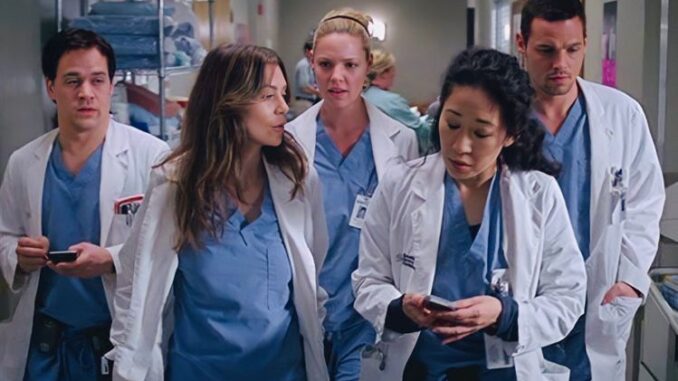
Grey’s Anatomy Was Breaking Barriers Long Before Most TV Shows Caught Up
For more than 20 years, Grey’s Anatomy has been known for shocking medical cases, unforgettable romances, and heartbreaking character exits. But one of the show’s most overlooked achievements may be its commitment to telling stories about transgender and nonbinary people long before many other network dramas were willing to do the same.
Years before diversity became a major talking point in Hollywood, Grey’s Anatomy was already putting trans and nonbinary characters at the center of meaningful storylines.
A Groundbreaking Story That Arrived Years Ahead of Its Time
Back in Season 3, Grey’s Anatomy introduced Donna Gibson, a transgender woman seeking gender-affirming surgery.
At a time when transgender representation on network television was extremely rare, the episode tackled complex issues surrounding identity, relationships, and medical care. Rather than treating Donna’s story as a gimmick, the show focused on her humanity and the emotional challenges she faced.
Looking back, many fans now consider it one of the most progressive storylines of Grey’s early years.
Grey Sloan Introduced One of TV’s First Major Trans Doctors
The series later made another significant step forward with Dr. Casey Parker.
Played by trans actor Alex Blue Davis, Casey was introduced as a brilliant surgeon, military veteran, and one of Grey Sloan’s most capable young doctors.
What made the character stand out wasn’t simply that he was transgender. It was that his identity was only one part of a much larger story.
For many viewers, seeing a trans doctor portrayed as confident, talented, and respected was a milestone rarely seen on network television.
The Show Also Gave Nonbinary Representation a Major Platform
Grey’s Anatomy continued pushing boundaries when it introduced neuroscientist Dr. Kai Bartley.
Played by nonbinary actor E.R. Fightmaster, Kai quickly became one of the most talked-about new additions to the series.
Their relationship with Amelia Shepherd sparked conversations among fans while also introducing many viewers to nonbinary representation in a mainstream television drama.
Unlike many previous portrayals on television, Kai’s identity wasn’t treated as something unusual. It was simply accepted as part of who they were.
Why These Storylines Still Matter
Television alone cannot solve the challenges faced by transgender and nonbinary communities.
But representation can make people feel seen.
Over the years, countless viewers have shared stories about how Grey’s Anatomy helped them better understand themselves, their loved ones, and experiences that are often misunderstood.
That may be one of the show’s most important legacies.
Because while Grey’s Anatomy is famous for saving lives inside the hospital, some of its most meaningful impact has happened far beyond the walls of Grey Sloan Memorial.
And decades later, the show continues proving that powerful storytelling can change far more than a patient’s diagnosis.