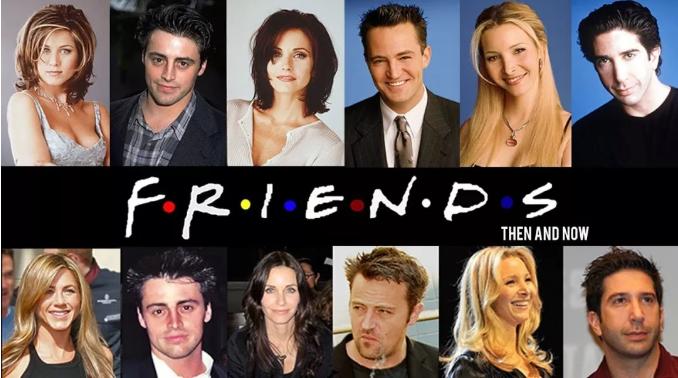
When Friends aired its final episode in 2004, few people could have predicted what would happen next. Like most television series, the sitcom was expected to enjoy a successful run in syndication before gradually becoming a nostalgic favorite for the generation that grew up with it. Instead, something far more remarkable occurred. More than twenty years later, Friends is not simply surviving—it is continuing to grow.
In 2026, the show remains one of the most recognizable television brands in the world. New viewers discover it every day. Social media platforms continue generating millions of interactions around clips and quotes. Streaming audiences regularly revisit episodes that first aired decades ago. Even younger viewers who were not born when Friends ended are becoming passionate fans.
This unexpected longevity has transformed Friends from a successful sitcom into a cultural phenomenon with an influence that spans generations. The question is no longer why Friends became popular. The real mystery is why its popularity continues expanding long after the series should have reached its natural endpoint.
Streaming Turned Friends Into A Permanent Discovery

One of the biggest reasons Friends continues thriving in 2026 is the way streaming changed television consumption. Previous generations watched sitcoms according to network schedules. Once a show ended, viewers typically moved on to whatever came next. Streaming platforms completely altered that relationship.
Today, Friends exists in a state of permanent accessibility. A teenager discovering the show for the first time can watch ten seasons in a matter of weeks. An older fan can revisit favorite episodes whenever they want. Unlike traditional television, there is no barrier separating old content from new audiences.
This accessibility has created an endless cycle of discovery. Every year introduces another wave of viewers who experience Ross, Rachel, Monica, Chandler, Joey, and Phoebe for the first time. Many of these fans then introduce the show to friends, family members, or online communities, creating even more exposure.
What makes this particularly impressive is that Friends has managed to remain competitive in an era filled with thousands of entertainment options. Modern viewers have access to more content than any previous generation, yet Friends consistently finds ways to attract attention. The show’s simple premise—a group of friends navigating adulthood—continues resonating despite dramatic changes in technology, culture, and viewing habits.
Streaming also encourages repeat viewing in a way traditional television never could. Fans frequently rewatch entire seasons, revisit favorite storylines, and rediscover episodes they had forgotten. This constant engagement keeps Friends active within popular culture rather than allowing it to become a relic of the past.
As a result, the show has achieved something few television series ever accomplish: it feels simultaneously nostalgic and current.
TikTok, Memes, And Social Media Gave Friends A Second Life

Another unexpected factor behind Friends’ continued growth is the role social media has played in introducing the series to entirely new audiences. In many ways, platforms like TikTok, Instagram, YouTube Shorts, and meme culture have become the modern equivalent of television syndication.
Short clips from Friends appear online every day. A funny Chandler one-liner, a classic Joey moment, or an unforgettable Phoebe scene can quickly generate millions of views. Often, viewers who encounter these clips have never watched the full series. Yet a single viral moment can inspire them to seek out entire episodes.
This process has fundamentally changed how younger audiences discover television. Instead of starting with Episode One, many people encounter Friends through social media fragments. They laugh at a scene, recognize a meme, or hear a famous quote. Eventually, curiosity leads them back to the original series.
The show’s format is particularly well suited to this environment. Friends contains countless short moments that work perfectly in isolation. A joke, reaction, or memorable line can circulate online without requiring extensive context. This makes the sitcom highly adaptable to modern digital platforms.
Perhaps even more importantly, Friends has become part of internet language itself. Quotes, GIFs, screenshots, and references continue appearing across social media conversations. Many users recognize famous Friends moments even if they have never watched a complete episode.
This ongoing visibility helps explain why the show’s popularity continues growing rather than shrinking. Every viral clip functions as free advertising for a series that ended more than twenty years ago. Few television programs enjoy that kind of sustained exposure.
A New Generation Is Watching Friends For Completely Different Reasons

One of the most fascinating aspects of Friends’ continued success is that modern viewers often connect with the show differently than original audiences did. The reasons people watched in the 1990s are not necessarily the reasons people watch in 2026.
For many younger fans, Friends offers something increasingly rare: a world centered on in-person relationships. The characters spend time together, talk face-to-face, and navigate life without constantly staring at phones or social media feeds. What once felt ordinary now feels almost refreshing.
This difference creates a unique viewing experience. Younger audiences are not simply watching a sitcom. They are observing a version of social life that feels both familiar and strangely distant. The show provides a sense of connection that many viewers find comforting.
At the same time, Friends remains relatable because its core themes are timeless. Career uncertainty, dating challenges, friendship, family expectations, and personal growth remain universal experiences. Technology changes, but many of the emotional struggles faced by the characters still resonate today.
Interestingly, modern fans often engage with the series more analytically than earlier audiences. Social media encourages discussions about character choices, relationships, and storylines. Debates surrounding Ross and Rachel, Monica and Chandler, or various controversial moments continue generating enormous engagement online.
Rather than diminishing interest in the show, these conversations help keep it relevant. Each generation brings new perspectives, creating fresh discussions around episodes that have existed for decades.
Friends Has Become Bigger Than Television

Perhaps the most surprising development is that Friends has evolved beyond the category of a television show. It now functions as a cultural brand with a presence that extends into multiple aspects of popular culture.
The show’s influence can be seen in fashion, merchandise, themed experiences, podcasts, online communities, and countless forms of fan-created content. References to Friends continue appearing across entertainment media because the series remains instantly recognizable to millions of people worldwide.
This level of cultural penetration is extraordinarily rare. Most successful shows eventually become associated with a specific era. Friends has avoided that fate by continually finding new audiences and adapting to new forms of media consumption.
Its continued popularity also benefits from simplicity. Unlike franchises that require extensive lore or complicated continuity, Friends is easy to understand. New viewers can start almost anywhere and quickly connect with the characters. This accessibility makes it especially attractive in an era where many entertainment properties feel increasingly complex.
The result is a feedback loop that keeps the series alive. Streaming drives discovery. Social media generates visibility. New viewers create fresh discussions. Those discussions attract even more viewers. Together, these factors have transformed Friends into one of the most enduring entertainment properties of the modern era.
When Friends ended in 2004, few observers would have predicted that its popularity would still be growing in 2026. Yet the series continues achieving what many modern shows can only hope for: attracting new audiences while maintaining the loyalty of longtime fans.
Streaming platforms have made the show permanently accessible. Social media has introduced it to generations that never watched it on television. Younger viewers continue finding relevance in stories that were originally written decades earlier. As a result, Friends remains not only a beloved sitcom but also an active part of contemporary culture.
The most remarkable aspect of this success is that it appears to have no clear endpoint. Instead of fading into nostalgia, Friends keeps reinventing itself through the people who discover it. Every viral clip, every streaming binge, and every online discussion contributes to a phenomenon that continues expanding year after year.
For a show that was supposed to be a product of the 1990s, Friends has achieved something extraordinary. It has become timeless. And in 2026, that unexpected trend shows no sign of slowing down.