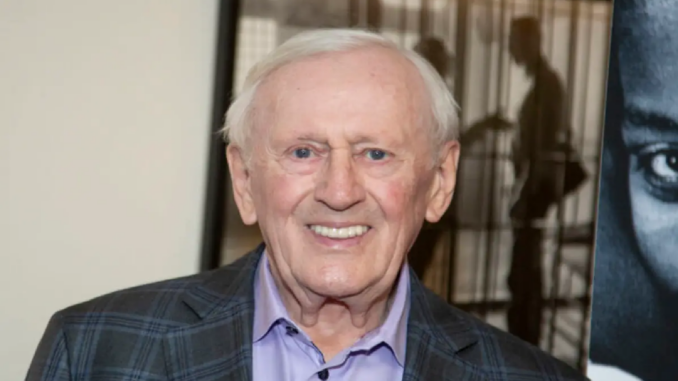
Blue Bloods HEARTBREAK: Reagan Family Rocked by Former Star’s Sudden Passing
The world of Blue Bloods has been shaken by another heartbreaking loss, as news of actor and comedian Alex Duong’s death has left fans revisiting his memorable appearances on the long-running CBS police drama. Duong, who portrayed Sonny Le, a criminal connected to Danny Reagan’s past, died on March 28, 2026, at the age of 42 after battling a rare and aggressive cancer. His passing marked the end of a life and career that was still developing, making the news particularly painful for those who had followed his work both on television and in the comedy world. Although Duong was not one of the central members of the Reagan family, his character became part of Danny’s complicated history, and his appearances helped create some of the show’s memorable stories involving loyalty, crime, justice, and the difficult line between a person’s past and present. As fans remember the performer, the story has also renewed conversations about the many actors and members of the wider Blue Bloods family who have left an enduring mark on the series.
For longtime viewers, Blue Bloods was never simply a police procedural. The show built its identity around the Reagan family, a multigenerational household where law enforcement was more than a profession. It was a tradition passed from one generation to another, shaping the family’s relationships, disagreements, sacrifices, and personal choices. Frank Reagan stood at the center of that world as the NYPD Commissioner, while his children Danny, Erin, and Jamie each followed different paths through the justice system. Around them were spouses, children, friends, colleagues, and recurring characters who gradually became part of the larger Reagan universe. That expansive world meant that even performers who appeared for only a handful of episodes could become connected to stories that fans remembered years later.
Alex Duong was one of those performers. He played Sonny Le, a gang leader and criminal from Danny Reagan’s past. According to CBS’s episode guide, Danny crossed paths with Sonny in the Season 13 episode “Poetic Justice,” where the detective investigated a gang attack with a shocking motive. Duong later returned to the role, making Sonny a recurring figure rather than a one-time appearance. His character was connected to the complicated world Danny often encountered during his investigations, where old relationships and unresolved conflicts could suddenly return to the present.
That connection to Danny made Sonny Le particularly interesting. Danny was never the kind of detective who treated every case as a completely separate event. His history frequently followed him into his professional life. Former acquaintances, criminals he had encountered before, and people who understood how he operated could reappear when he least expected them. Sonny represented exactly that kind of complication. He was part of Danny’s past, but his actions could still create consequences in the present.
Duong’s performance gave the character a distinctive presence. Sonny was not simply another anonymous suspect passing through an investigation. His connection to Danny created a sense of history, allowing the story to explore how people can change while old relationships continue to influence them. That dynamic was particularly appropriate for Blue Bloods, a series that repeatedly returned to the idea that nobody can completely escape their past.
Away from Blue Bloods, Duong was building a career as a comedian, actor, and writer. Born in Dallas in 1984, he entered entertainment through multiple creative paths and eventually became part of the Los Angeles comedy community. His television credits included appearances on shows such as Everybody Hates Chris, Mad TV, Dexter, The Young and the Restless, and other productions. His work on Blue Bloods was only one part of a much larger career.
What makes his death especially heartbreaking is that his career was beginning to gain momentum when his health crisis emerged. Duong was diagnosed in 2025 with alveolar rhabdomyosarcoma, a rare and aggressive form of soft-tissue cancer. The disease affected the area around his eye and eventually caused him to lose vision in that eye. His treatment included major medical interventions, chemotherapy, and radiation, while his family and friends worked to help with the enormous financial burden created by his illness.
Despite the seriousness of his condition, Duong continued to be remembered as someone deeply connected to comedy. His fellow performers rallied around him, organizing support and fundraising efforts during his illness. The comedy community’s response demonstrated how many relationships he had built during years of performing. For someone whose professional identity was based on making audiences laugh, the support of fellow comedians became an important part of his final chapter.
His death came after his condition deteriorated rapidly. Reports stated that Duong went into septic shock before dying in Santa Monica on March 28. His wife, Christina, and their young daughter, Everest, were able to be with him near the end. Reports also said he was able to say goodbye to his daughter, adding an especially emotional dimension to the story of his final days.
For Blue Bloods viewers, those details inevitably make his television appearances feel different. Watching Sonny Le on screen now means watching an actor whose life was cut short at only 42. The character remains preserved in the episodes, while the performer who created him is no longer here to continue building his career. It is one of the strange realities of television: performances remain available long after the people behind them have moved on.
The Reagan family itself has experienced many fictional losses throughout Blue Bloods. The series never shied away from the emotional consequences of death. Danny’s life was dramatically changed by the death of his wife, Linda Reagan, while other characters were forced to confront the risks associated with police work. These stories repeatedly demonstrated that grief does not simply disappear when an episode ends. It changes relationships and influences the decisions characters make afterward.
Danny’s experience with loss makes the real-life death of an actor connected to his storyline particularly poignant. Donnie Wahlberg’s portrayal of Danny has always emphasized the detective’s emotional intensity. Danny could be aggressive and impatient, but those characteristics were often connected to how deeply he cared about victims, his children, and the people around him. His personal history made him one of the show’s most complicated characters.
Sonny Le existed within that world of unresolved history. Danny’s encounters with him were not simply about catching another criminal. They were connected to the detective’s understanding of people who had chosen different paths. That made Duong’s role an interesting piece of the larger Blue Bloods puzzle.
The significance of Duong’s passing also becomes clearer when looking at the show’s broader history. Blue Bloods ran for 14 seasons from 2010 to 2024 and featured an enormous number of guest and recurring performers. Some appeared once, while others returned repeatedly. Over the years, several actors connected to the series have also died, including Treat Williams, who played Lenny Ross, a friend of Frank Reagan.
Treat Williams’ death in 2023 was especially emotional for the Blue Bloods community because his character had a meaningful relationship with Frank. The cast publicly remembered Williams after his death, demonstrating how professional relationships formed during years of production could become genuine personal connections. Other performers connected to the series have also passed away, creating a growing list of names associated with the show’s history.
Duong’s story is different because his role was smaller, but that does not make his contribution insignificant. Television productions are built from hundreds of individual performances. A recurring character can appear for only a few episodes and still become an important part of a particular storyline. Sonny Le was one such character, and Duong’s work helped bring Danny’s past into the present.
For Danny, encountering Sonny meant confronting a world outside the traditional Reagan family structure. The Reagans believed strongly in loyalty and responsibility, but Danny’s investigations regularly exposed him to people who lived by entirely different rules. Sonny’s presence provided another reminder that the line between personal history and professional duty could be complicated.
That theme feels particularly appropriate when reflecting on Duong’s life. His career crossed different worlds. He worked in comedy, television, writing, and performance, gradually creating an identity that was much larger than any single role. His work demonstrated persistence in an industry where opportunities can be difficult to find, particularly for performers trying to move beyond stereotypes.
The Los Angeles Times reported that Duong had spoken about his efforts to move away from stereotypical roles for Asian American performers. His ambition was not simply to appear on television but to find characters and creative opportunities that allowed him to show more of what he could do. His role on Blue Bloods became part of that journey.
The timing of his diagnosis made that journey even more painful. His acting and touring opportunities were beginning to expand, including plans to work with comedian Ronny Chieng. Instead, his illness interrupted the career he had spent years building. The contrast between professional momentum and sudden medical crisis is one of the most difficult aspects of his story.
Yet those who remembered Duong have emphasized more than the tragedy. They have spoken about his humor, his dedication to his family, and his relationships within the comedy community. His wife and daughter were central to his life, and the support surrounding them after his death has shown how many people cared about him.
For Blue Bloods fans, the best way to approach his passing is therefore not simply through the language of shock and sadness. It is also an opportunity to remember the person behind the character. Sonny Le may have been a fictional criminal, but Alex Duong was a real performer whose life included far more than the role.
His comedy career is particularly important to his legacy. Long before many television viewers recognized his face, Duong had been working in stand-up and developing his voice as a comedian. He became involved with the Comedy Store community in Los Angeles and participated in the Roast Battle scene. Those experiences helped establish him as a performer in his own right.
That background also explains why his death resonated beyond the Blue Bloods fandom. His friends and fellow comedians had known him through years of performances, collaborations, and shared experiences. When his illness became public, members of that community organized benefit events and fundraising campaigns to support him and his family. The response demonstrated the strength of the network he had built during his career.
There is something especially moving about seeing an actor remembered not only for the characters he played but for the people he inspired outside the screen. Duong’s legacy is therefore not limited to Sonny Le. It includes his comedy, his creative ambitions, his friendships, and the family he leaves behind.
For viewers returning to Blue Bloods, however, Sonny Le will remain part of the show’s permanent history. His episodes capture a specific period in Danny Reagan’s career and provide another example of how the series used recurring characters to create continuity. Whenever fans revisit those episodes, they will see Duong performing a role that exists forever within the Blue Bloods universe.
That is one of television’s quietest forms of legacy. A performer may be gone, but their work remains available. A scene filmed years ago can still make an audience laugh, feel suspense, or remember a particular storyline. The actor cannot return to create new memories, but the memories already created cannot be erased.
For the Reagan family, the idea of remembering those who are gone has always been central. Sunday dinner is perhaps the clearest symbol of that philosophy. The family gathers, tells stories, argues, jokes, and remembers. Even when someone is absent, their presence can still be felt through the conversations of those who remain.
That same idea can be applied to the broader Blue Bloods family. The actors who have passed away remain part of the show’s history. Their performances are woven into the episodes that fans continue to revisit. Their names may appear less frequently in everyday conversations, but every rerun can bring them back for another moment.
Alex Duong’s passing is therefore both a heartbreaking real-world loss and another reminder of how much history exists within Blue Bloods. Fourteen seasons created a vast collection of characters, performances, friendships, and memories. Some of the people who helped build that world are no longer here, but their work remains.
For fans who knew Sonny Le only as a character, discovering Duong’s story may encourage them to look beyond the role. They may revisit his episodes, explore his comedy, and learn about the career he was building before cancer interrupted it. In doing so, they can remember him as more than a fictional gang leader.
The most painful part of Duong’s story is that he was only 42 and still had so much ahead of him. His career was expanding. His comedy work was gaining recognition. His acting opportunities were continuing. He had a wife and young daughter who were central to his world. His death represents not only the end of a life but the loss of countless possibilities that will now remain unrealized.
Still, his work gives audiences something permanent. Every performance preserves a moment of his creativity. Every joke he recorded, every television appearance, and every character he played represents something he left behind. Sonny Le is one of those lasting pieces.
For Blue Bloods, the loss becomes another chapter in a long history of saying goodbye to people connected to the show. The series may have ended its original run, but its characters and performers continue to live through reruns, streaming, discussions, and new stories connected to the franchise. The memories of those who contributed to it will continue alongside that legacy.
And that may be the most fitting way to remember Alex Duong. Not only as the former Blue Bloods actor who died at 42, but as a performer who fought to build a career on his own terms, a comedian who brought people together through laughter, and a husband and father whose family remained at the center of his life. His journey was far too short, but the work he left behind continues to speak for him.
For longtime Blue Bloods viewers, Sonny Le will forever remain a small but meaningful part of Danny Reagan’s story. Behind that character was an actor whose career was still unfolding, whose ambitions were still growing, and whose life touched far more people than a television credit can show. His passing is heartbreaking, but his work remains.
The Reagan family has always believed that people are remembered through the stories they leave behind. Alex Duong now has his own place within the history of Blue Bloods, not because he was there for fourteen seasons, but because for the episodes in which he appeared, he helped make the world of the Reagan family feel a little larger, more complicated, and more real. And every time fans return to those episodes, his performance will remain there — a lasting reminder of an actor whose life and career deserved far more time.