
For decades, hospital dramas have followed a familiar formula: nail-biting emergency cases, complicated doctor-soldier romances, and emotionally charged life-saving moments.
But The Pitt takes a different approach.
It’s not just about doctors treating patients.
It’s about people trying to survive in an environment where every second can change everything.
Set in the emergency department of Pittsburgh Trauma Medical Center, The Pitt takes viewers into a tense 15-hour shift, with each episode representing a specific period of the workday.
This isn’t a story about perfect heroes.
This is a story about ordinary people making extraordinary decisions.
A Day in the Emergency Room: No Time to Pause
From its very first episode, “7:00 A.M.”, The Pitt introduces a world where chaos begins the moment the shift opens. Dr. Michael “Robby” Robinavitch enters the hospital with the responsibility of leading a team grappling with a multitude of patients, pressure, and painful personal memories.
Unlike many medical dramas that focus on one major case per episode, The Pitt shows the reality that in the emergency room, everything happens simultaneously.
A patient needs surgery.
A panicking family member.
A young doctor makes a mistake.
A nurse has to make a decision in seconds.
No one has time to process their emotions before a new situation arises.
That’s the true rhythm of life in the emergency room.
Dr. Robby: A Leader Carrying His Own Wounds
At the heart of the story is Dr. Michael “Robby” Robinavitch, played by Noah Wyle.
Robby isn’t the typical TV doctor who always knows the right answer.
He’s brilliant, experienced, and respected by his colleagues, but he’s also a man carrying unresolved wounds.
The series explores Robby’s internal struggle after losses in the medical field, particularly the impact of the pandemic and the death of a mentor he once greatly respected.
He must lead young doctors.
Keep the emergency department running.
And try not to let painful memories consume him.
Robby represents a big question that The Pitt constantly asks:
Who will take care of those who are always taking care of others?
The Unsung Heroes
One of The Pitt’s greatest strengths is that the film isn’t just focused on doctors.
Nurses, residents, medical students, and support staff all play a vital role in the story.
Dana Evans, the head nurse of the emergency department, is a prime example. She’s not the boss on paper, but she’s the one who keeps the department from collapsing during the most chaotic times.
Dana understands that in a hospital, sometimes a well-timed word is as important as a medical decision.
She knows when to be firm.
When to be empathetic.
And when to protect those who are exhausted.
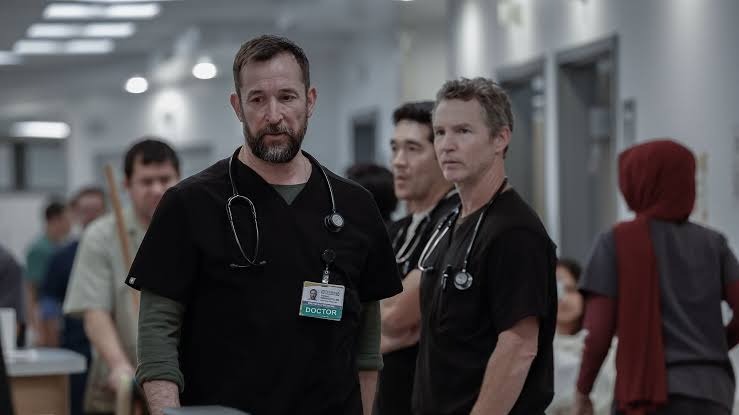
Young Doctors and Life Lessons in Hours
Besides experienced doctors, The Pitt also focuses on those new to the medical profession.
They enter the hospital with textbook knowledge.
But quickly realize that reality is not like any test.
A misdiagnosis can affect a life.
A thoughtless remark can hurt a family.
A moment of hesitation can become something they remember for a lifetime.
The young characters in the film don’t just learn how to treat illnesses.
They learn how to face responsibility.
What makes The Pitt different: Patients are not just “cases”
One of the points appreciated by viewers is how the film portrays patients as real people, not just tools for the script. Many viewers commented that the patients in The Pitt have their own circumstances, emotions, and problems instead of just appearing to serve a medical lesson.
A patient is not just:
“An accident victim.”
“Someone needing a diagnosis.”
“Someone whose life is saved at the end of the episode.”
They are parents.
They are children.
They are people having an ordinary day before life suddenly changes.
And that’s what makes each doctor’s decision so weighty.
The authenticity makes the audience feel like they are in the hospital.
A key element contributing to The Pitt’s appeal is its focus on authenticity. The series has received praise from the medical community for its portrayal of the pressure, procedures, and emotions of emergency room staff, even with some dramatized elements to suit television.
The audience doesn’t just see the life-saving operations.
They see the exhaustion.
The arguments.
The moments of silence after a failed operation.
Those moments when medical staff have to step into the break room, close the door, and try to regain their composure before returning to the battlefield.
A story of humanity amidst chaos.
What makes The Pitt powerful isn’t just the tense emergency scenes.
It’s how the film reminds viewers that behind every medical uniform is a human being.
They are afraid too.
They make mistakes too.
They also have days when they want to give up.
But they still come back.
Because somewhere in the hospital, there’s always someone who needs them.
Why does The Pitt resonate with audiences so much?
Because it’s not just a movie about a hospital.
It’s a movie about people in their most vulnerable moments.
A single day in the emergency room can contain dozens of stories.
Some people are saved.
Some people face loss.
Some people start new careers.
Some people realize they are no longer the same people they once were.
And all those stories unfold simultaneously.
“The Pitt isn’t about doctors who never give up. It’s about people who get back up, keep going into the emergency room and fighting—even though they’re only human.”
That’s why this life-or-death day in the hospital became one of the most memorable television stories about modern medicine.