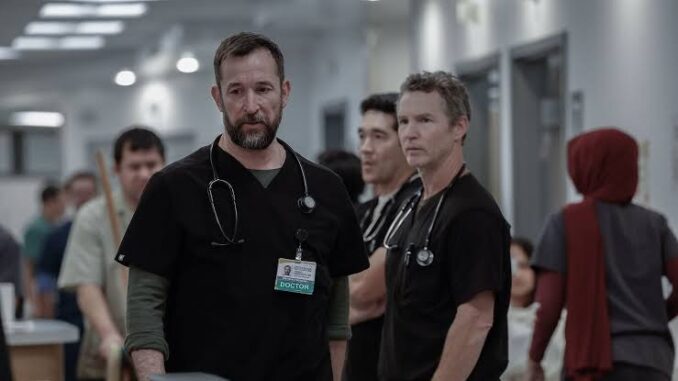
The Pitt is more than just a story about tense emergency cases or a race against time in the hospital. At the heart of the film is Dr. Michael “Robby” Robinavitch – a veteran emergency room doctor who is both a pillar of support for his colleagues and a man silently carrying unspoken wounds.
Played by Noah Wyle, Robby is the kind of character who doesn’t need many words to convey his weight. Through his eyes, his silence, or his reaction to a difficult case, the audience can sense a man who has spent years teetering on the brink of life and death.
Behind the image of a calm, decisive doctor lies a man facing exhaustion, painful memories, and the greatest question of the medical profession:
How can one continue to save lives when one is also suffering?
Robby – The Leader in a Chaotic Emergency Room
In the emergency department, Robby is one of the people everyone turns to when things get serious.
He relies not only on his medical knowledge, but also on:
Years of experience
The ability to quickly assess situations
Calmness under pressure
The ability to lead a diverse team
An emergency room can become chaotic in just minutes. Patients arrive constantly, staff have to make a series of decisions, and every mistake can be costly.
In that situation, Robby becomes the one who keeps things from falling apart.
But the film also reveals a truth:
The person who always keeps others calm doesn’t mean they don’t have their own fears.
The white coat hides invisible wounds
One of the most important themes of The Pitt is the psychological vulnerability of healthcare workers.
Robby is a clear example of that. He witnessed:
Patients who couldn’t be saved
Families receiving heartbreaking news
Decisions with no perfect options
Consequences rarely seen outside the hospital
Each shift left its mark.
There were moments when doctors had to move on immediately after a loss, because another patient was waiting to be saved.
But the emotions didn’t disappear just because the shift ended.
The pressure of being the final decision-maker
One of Robby’s biggest burdens was responsibility.
In the emergency room, there were times when no one had enough information, no perfect solution, and no time to wait.
Robby had to make choices like:
What should be prioritized?
When should more drastic intervention be needed?
When should the limits of medicine be accepted?
How to protect the patient while remaining realistic?
These were decisions that weren’t solely based on expertise. They also need:
Courage
Understanding of people
The ability to take responsibility for consequences
Robby and the loneliness of a leader
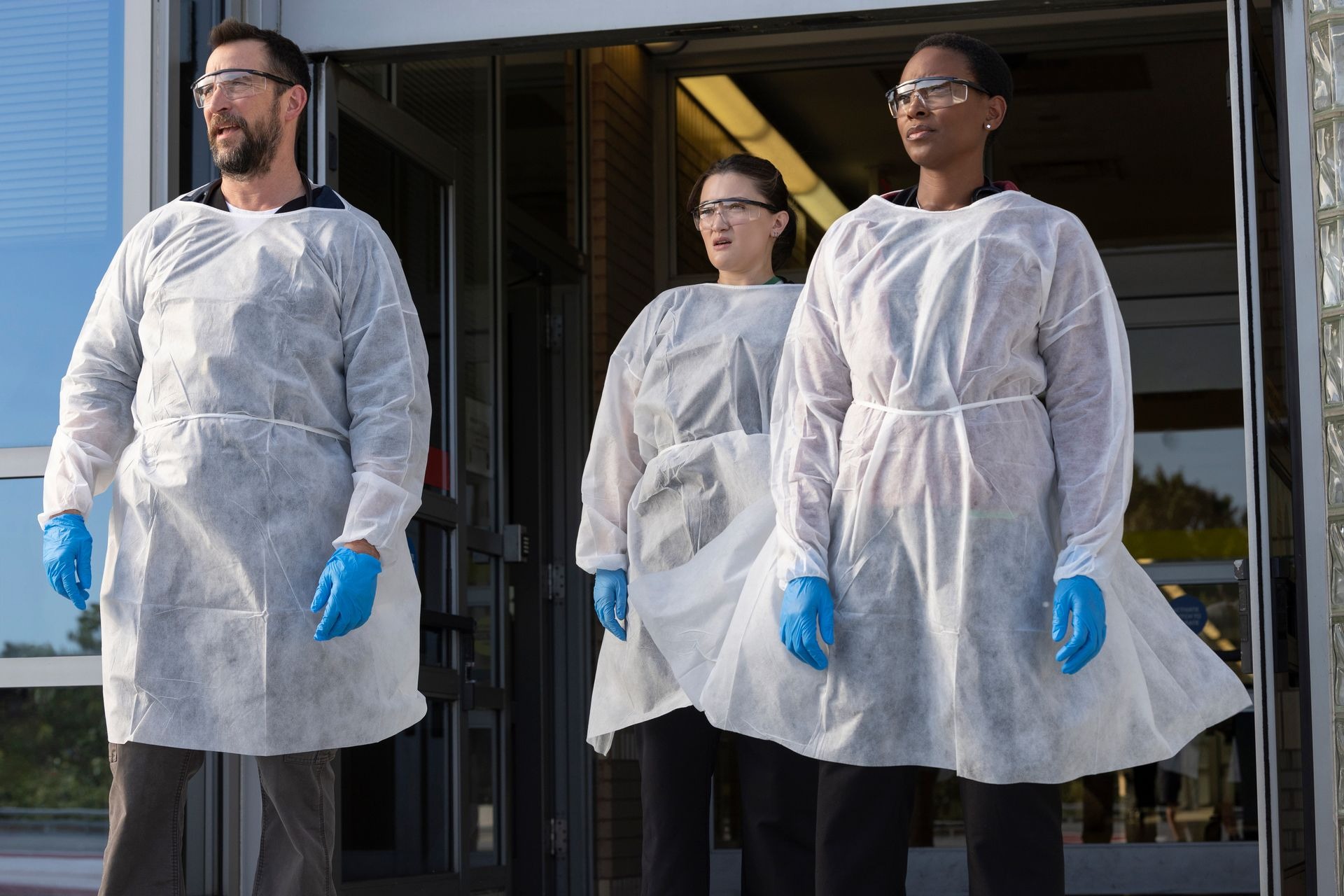
A touching aspect of the character is his loneliness.
As the person with the most experience, Robby often has to become a fulcrum for others.
Young doctors looked to him for advice.
Colleagues rely on him in critical situations.
But the question is:
Who will stand beside Robby when he himself is in trouble?
The film exploits this contradiction very clearly:
A doctor can understand how to save a patient
But sometimes we don’t know how to heal ourselves
The relationship between Robby and the younger generation of doctors
An important part of Robby’s journey is his role as a mentor.
He not only treated patients, but also trained those who would continue his work later.
To young doctors, Robby represents:
Experience
Strictness
The real lessons are not in the book
But the process of guiding them also forces Robby to look at himself.
He was faced with the question:
Is the way he used to exist in the medical profession still relevant to the new generation?
Moments that make the audience sympathize with Robby
What makes Robby a memorable character isn’t just the times he saves patients’ lives.
But also very human moments:
When he was silent after a failed case
Not every patient can be saved.
These failures do not disappear after the doctor leaves the hospital room.
When he tried to protect the team
Robby understands that a good doctor needs more than just technical skills.
A strong team needs trust and a feeling of support.
When he had to choose between reason and emotion
Medicine requires precision, but patients are not numbers.
Every decision is related to a person, a family and a life.
Noah Wyle and his performance as a character with many layers of emotions
Noah Wyle was famous for playing Dr. John Carter in ER, and the role of Robby in The Pitt brings a more mature perspective on the medical profession.
If John Carter once represented the coming-of-age journey of a young doctor, then Robby is the image of someone who has gone through years of fighting and must face the price of experience.
Wyle’s performance focuses on moderation:
A tired look
A moment of silence before a difficult decision
A small reaction to witnessing loss
Those details make Robby real.
Robby represents unsung heroes
Unlike traditional heroic figures, Robby does not win through strength.
He fights with:
Knowledge
Perseverance
Compassion
The ability to continue to walk into the emergency room every day
But the film also reminds that those who save lives are not always invulnerable.
They also need to be listened to, supported, and acknowledged for the difficulties they carry.