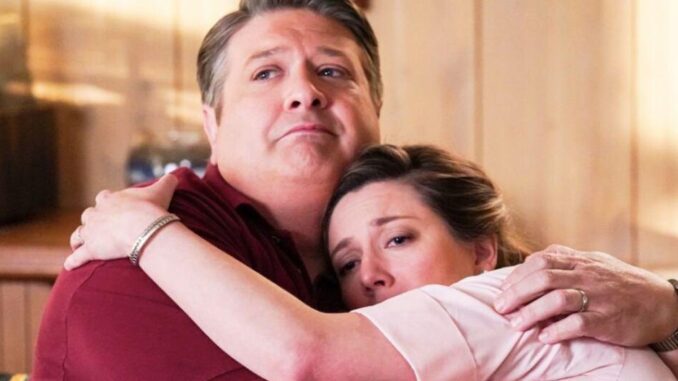
For years, fans of The Big Bang Theory believed they already knew every important detail about Sheldon Cooper’s childhood. Stories about his strict mother, distant father, troublesome siblings, and lonely upbringing had been told repeatedly throughout the original sitcom. Those memories shaped how audiences imagined the Cooper family long before Young Sheldon ever aired.
Then something unexpected happened.
Instead of simply recreating the stories fans had heard for years, Young Sheldon challenged many of them.
Characters who had once existed only through Sheldon’s memories suddenly became complex, relatable people with hopes, flaws, and emotional depth. Nowhere was that transformation more remarkable than with George Cooper.
By the time the prequel ended, George wasn’t remembered as the careless father Sheldon once described.
He had become one of the franchise’s greatest characters.
A Father Fans Thought They Already Knew
In The Big Bang Theory, George Cooper was almost a ghost.
He appeared only through Sheldon’s recollections, and those memories weren’t particularly flattering. Sheldon often described his father as emotionally distant, irresponsible, and someone who struggled to connect with his gifted son.
Because viewers never met George directly, there was little reason to question that version of events.
It simply became accepted as fact.
When Young Sheldon was announced, many expected the series to reinforce everything audiences had already heard.
Instead, it completely changed the conversation.
The George Cooper Nobody Expected
From the very first season, George Cooper felt very different from the man described in The Big Bang Theory.
He wasn’t perfect.
He made mistakes.
He lost his patience.
He worried about money.
He struggled to understand his brilliant son.
But he also loved his family with quiet determination.
George attended football practices, worked long hours, tried to hold his marriage together, and constantly searched for ways to support children who couldn’t have been more different from one another.
He rarely expressed his emotions through words.
Instead, he showed them through actions.
Those small moments gradually revealed a father far more compassionate than anyone expected.
Sheldon Wasn’t Always the Most Reliable Narrator
One of the most fascinating aspects of Young Sheldon is how it subtly encourages viewers to reconsider Sheldon’s perspective.
Throughout The Big Bang Theory, Sheldon often viewed life through logic rather than emotion. He interpreted situations literally, sometimes missing the deeper motivations behind other people’s actions.
As an adult, he remembered facts.
But he didn’t always understand feelings.
Young Sheldon suggests that some childhood memories became simplified over time.
George wasn’t ignoring Sheldon because he didn’t care.
Often, he simply didn’t know how to communicate with a child whose mind worked differently from everyone else’s.
That distinction changed everything.
Rather than contradicting The Big Bang Theory, the prequel expanded it by reminding audiences that childhood memories are rarely complete.
The Most Heartbreaking Episode Came Without a Twist
Everyone who watched Young Sheldon knew George’s story had to end.
His death had been established years earlier in The Big Bang Theory.
The writers couldn’t change history.
What they could change was how audiences experienced it.
Instead of presenting George as a tragic figure from the beginning, they allowed viewers to spend seven seasons watching him become a better husband, a better father, and a better man.
That decision transformed an event fans already knew was coming into one of the most emotional episodes in the franchise’s history.
There was no shocking plot twist.
No surprise villain.
Only a family suddenly forced to imagine life without the person who had quietly held them together.
George Changed Every Member of the Cooper Family
His absence affected everyone differently.
Mary suddenly had to navigate life without her partner.
Georgie became the family’s protector almost overnight.
Missy lost the parent who often understood her best.
Sheldon carried both grief and guilt as he prepared to leave for California.
The series never suggested George was flawless.
Instead, it argued something far more powerful.
People don’t need to be perfect to become unforgettable.
Sometimes their greatest impact is only fully understood after they’re gone.
Why Fans Now Defend George Cooper
One of the biggest surprises following Young Sheldon’s finale was how dramatically fan opinion shifted.
Characters who were once overlooked suddenly became fan favorites.
Online discussions filled with viewers admitting they had misjudged George for years.
Many even argued that he became the emotional heart of the entire series.
That reaction speaks volumes about the quality of the writing.
Changing audience opinions after seven seasons is difficult.
Changing opinions about a character who technically died before the original sitcom even began is almost impossible.
Yet Young Sheldon accomplished exactly that.
A Legacy Bigger Than Sheldon Himself
Ironically, one of Young Sheldon’s greatest achievements had very little to do with Sheldon.
The series reminded viewers that every family story contains multiple perspectives.
Children remember parents differently.
Parents hide struggles their children never notice.
Time changes how memories are understood.
By exploring those ideas, the show evolved beyond being a simple sitcom.
It became a story about empathy.
About realizing that people are often far more complicated than the versions we carry in our memories.
George Cooper became the perfect example of that lesson.
Final Thoughts
When Young Sheldon was first announced, fans assumed it existed to explain Sheldon Cooper.
Instead, it ended up redefining George Cooper.
Very few prequels manage to improve an already successful franchise.
Even fewer completely transform the audience’s understanding of a character who had already been established for years.
Young Sheldon achieved both.
Today, George Cooper is remembered not as the father Sheldon once described, but as the father audiences finally had the chance to know.
And that may be the greatest accomplishment the series ever achieved.